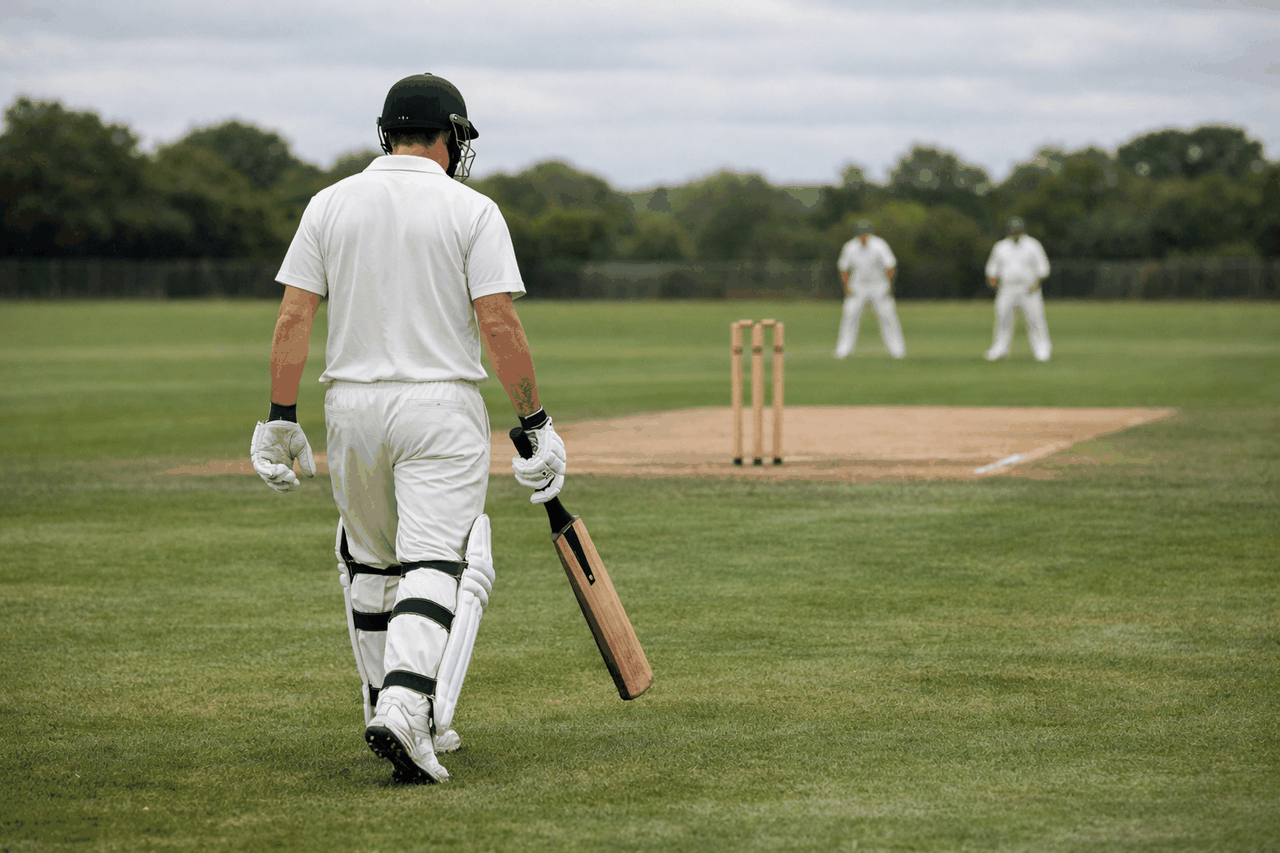
The side batting first can enforce the follow-on when both teams have completed their first innings and its lead reaches the required threshold. It can then require the opposition to bat again immediately. In a standard men’s Test, that threshold is 200 runs. Reaching it gives the captain a choice: enforcing the follow-on is optional.
Check the match length, then calculate the lead
The follow-on applies in a two-innings match, where each side can bat twice. To decide whether it is available, subtract the opposition’s completed first-innings score from the score made by the side batting first. Compare that lead with the threshold for the match.
| Match length | Minimum first-innings lead |
|---|---|
| Five days or more | 200 runs |
| Three or four days | 150 runs |
| Two days | 100 runs |
| One day | 75 runs |
The lead must be at least the threshold. In a five-day match, a lead of exactly 200 qualifies. A lead of 199 falls short. The size of the first team’s total alone does not decide it.
What if the whole first day has no play?
If there is no play on the first day, use the number of days remaining, including the first day on which play begins. For a scheduled five-day match whose first day is wholly lost, play beginning on day two leaves four days. The follow-on threshold is therefore 150 runs.
This adjustment depends on the first day having no play. A rain interruption alone is not the same condition.
Enforcing changes the batting order
Call the side batting first A and its opponent B. After their completed first innings, the order has been A, then B. The captain’s decision determines who bats next:
- Enforce the follow-on: B bats again. The potential order is A → B → B → A.
- Decline the follow-on: A bats again. The potential order is A → B → A → B.
Those sequences show the order if all four innings are needed. A match can finish earlier, as the innings-win example below shows. If A’s lead is below the threshold, it cannot require B to follow on: A bats next.
To enforce the follow-on, the captain must notify both the opposing captain and the umpires. Once that notification has been given, the decision cannot subsequently be withdrawn.
Worked examples: who bats next?
These fictional scores show the difference between qualifying for the follow-on, choosing to enforce it and winning after the opposition has followed on.
| Fictional first innings | Threshold check | Next innings |
|---|---|---|
| A 420, B 220, five days | 420 − 220 = 200; 200 ≥ 200. | Enforce: B bats again. Decline: A bats again. |
| A 420, B 221, five days | 420 − 221 = 199; 199 < 200. | A bats again. |
| A 420, B 270, scheduled five-day match; first day wholly lost and play starts on day two | Four days remain. 420 − 270 = 150; 150 ≥ 150. | A can send B back in or bat again. |
| A 420; B 220, then 180 after following on | B has 400 across its two completed innings. 420 − (220 + 180) = 20. | No further innings: A wins by an innings and 20 runs. |
In the final row, B has used both innings and still has 20 fewer runs than A made in one. A therefore does not need to bat again. That is what “an innings and 20 runs” describes.
Why a captain might enforce or decline
Eligibility answers whether the captain can enforce the follow-on. Rain, time and bowler workload help frame the separate decision about whether to do so.
- Rain: lost playing time affects how much opportunity remains to complete the match.
- Time remaining: enforcing sends B straight into its second innings; declining means A takes its second innings first.
- Bowler workload: enforcing asks A’s bowlers to bowl again immediately. Batting again gives them a break from bowling.
The threshold does not prescribe the choice. It establishes the option; the captain must weigh the match situation before giving the notification.